Leveraging Digital Twins: Practical Enterprise Use Cases And Insights
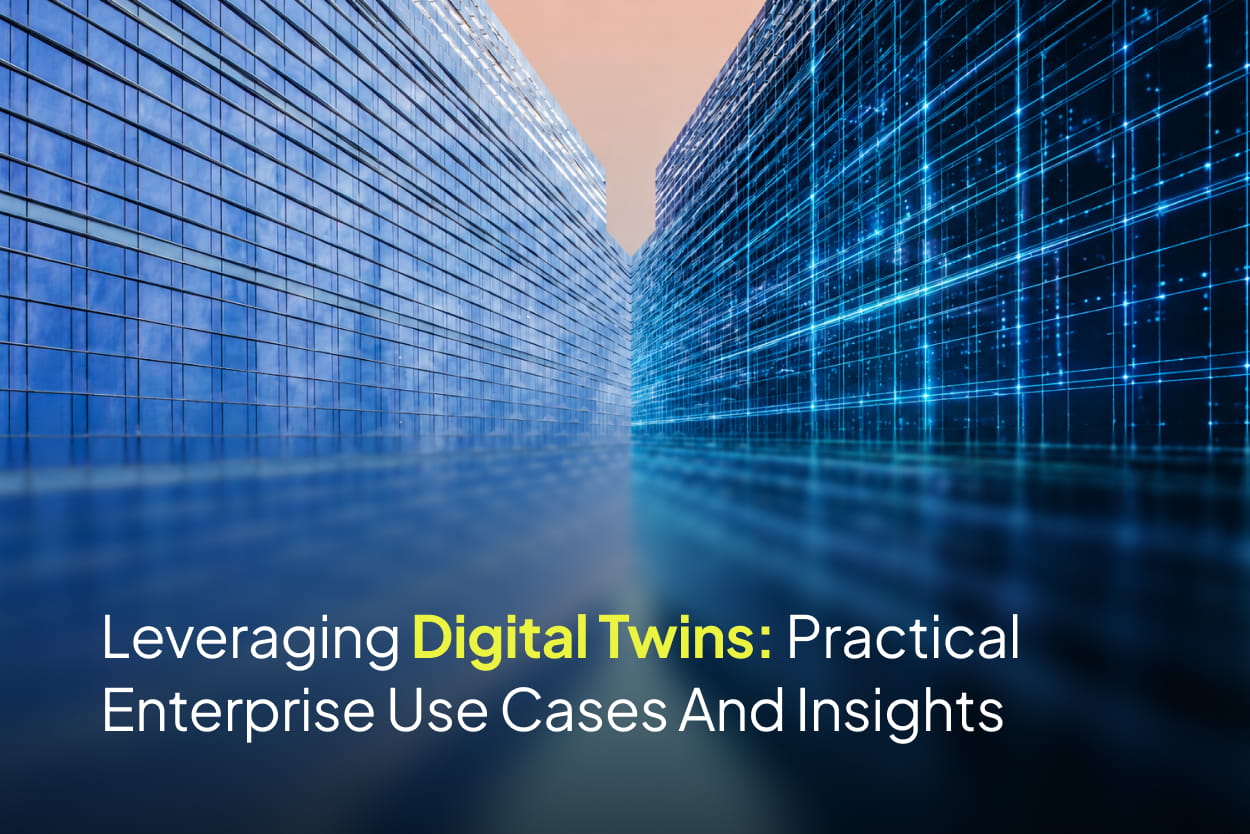
Digital twins are no longer experimental tech. They are real business systems used across industries today.
Digital twin technology creates a live digital version of a real system, asset, or process.
This digital version connects to real data. It updates in real time. Thus, it helps teams test decisions before they act.
In simple terms, digital twins help businesses see what is happening, predict what will happen, and improve what comes next.
Organizations are adopting enterprise digital twins because AI, IoT, and data platforms are now mature enough to support live systems. This is not hype. It is infrastructure.
Business digital twins are moving from “innovation projects” to core enterprise systems. They now sit inside operations, planning, and decision workflows.
This shift is why companies invest in:
- custom business software development
- A strong custom software development team
- Scalable custom development software
Digital twins are no longer side tools. They are becoming part of how modern enterprises run.
What Is a Digital Twin? (Enterprise-Grade Definition)
Core Definition
A digital twin is a live digital version of a real-world system. It is built from four connected layers:
Physical asset
The real thing. This can be a machine, building, factory, vehicle, system, or process.
Real-time data
Live data from sensors, software systems, and devices.
Virtual model
A digital structure that mirrors the real system.
Simulation layer
Logic and models that test scenarios and predict outcomes.
So the full structure looks like this:
Physical asset + real-time data + virtual model + simulation layer = digital twin
This is the digital twin architecture used in enterprise systems.
Digital model vs digital shadow vs digital twin
| Type | What it means | Data flow | Decision power |
| Digital model | Static digital version | Manual updates | No prediction |
| Digital shadow | Auto-updating digital view | One-way data | Limited insight |
| Digital twin | Live digital system | Two-way data | Prediction + simulation |
Let’s break that down in simple terms.
Digital model
This is just a digital copy. Think of CAD files or 3D designs. No live data. No updates. No intelligence.
Digital shadow
This updates automatically from the real world. But it only shows what is happening. It cannot simulate or predict outcomes.
Digital twin
This is a live system.
- It updates in real time.
- It runs simulations.
- It predicts outcomes.
- It supports decisions.
Only the last one is a real digital twin.
Core Components of a Digital Twin
A real digital twin is a full system made of connected parts. Below are the core digital twin components used in enterprise-grade systems.
IoT sensors
This is where data begins. Sensors collect real-world signals like:
- Temperature
- Motion
- Pressure
- Speed
- Energy use
- Machine status
Real-time data pipelines
This is how data moves. They keep the digital twin live and accurate. Without strong pipelines, data becomes slow and unreliable. These pipelines:
- Collect data
- Clean data
- Stream data
- Route data
- Sync data
AI/ML models
This is the intelligence layer. A Deloitte study states that digital twins help companies use real-time data and analytics to improve day-to-day performance and enable predictive maintenance. This allows teams to spot issues early and fix them before they cause costly downtime. AI and ML models help the system:
- Predict failures
- Detect patterns
- Forecast demand
- Spot risks
- Optimize actions
This turns digital twins into decision tools, not just views.
Simulation engines
Simulation engines let you test actions without touching real systems. This reduces risk and cost allows teams to:
- Test scenarios
- Run “what-if” cases
- Compare outcomes
- Stress-test systems
- Plan changes safely
Cloud + edge computing
Cloud computing handles:
- Big data
- AI models
- Storage
- Analytics
- Scaling
Edge computing handles:
- Fast local decisions
- Low latency
- On-site processing
- Real-time control
Visualization layers (3D, dashboards, XR)
Visualization tools turn data into clear views that teams can understand and act on. This is how humans interact with the twin. Visualization tools include:
- 3D models
- Dashboards
- Control panels
- AR (augmented reality)
- VR (virtual reality)
- XR (extended reality)
How this works in real enterprise systems
In real companies, this is built using:
- custom business software development
- A skilled custom software development team
- Scalable custom development software
Why?
Because enterprise digital twins require custom-built systems. Off-the-shelf tools cannot handle:
- Complex systems
- Industry rules
- Deep integrations
- Legacy platforms
- AI pipelines
- Security needs
- Real-time processing
Clear system view
Here’s a clean structure of digital twin architecture:

Types of Digital Twins in Enterprise Systems
Not all digital twins are the same. They work at different levels of a business. These are the main types of digital twins used in modern enterprises.
Asset digital twins
These focus on a single physical asset. This can be:
- A machine
- A vehicle
- A turbine
- A robot
- A medical device
- A server
- A production unit
Asset digital twins track the health and behavior of one object. They help teams:
- Monitor performance
- Predict failures
- Plan maintenance
- Reduce downtime
- Extend asset life
Process digital twins
These focus on how work flows, not just machines. They model business processes like:
- Manufacturing flows
- Supply chains
- Order fulfillment
- Logistics
- Customer onboarding
- Service delivery
- Claims processing
Process digital twins allow leaders to test changes before making them real. This makes decisions safer and smarter. These types of twins help teams see:
- Bottlenecks
- Delays
- Waste
- Inefficiency
- Risk points
System digital twins
These focus on connected systems, not single parts. They combine:
- Multiple assets
- Multiple processes
- Multiple platforms
- Multiple data sources
Examples of system digital twins include:
- Factory systems
- Hospital systems
- Transport networks
- Energy grids
- Enterprise IT systems
System digital twins show how everything affects everything else. This helps with:
- Capacity planning
- Risk management
- Performance tuning
- Failure prevention
- Long-term planning
Organizational digital twins
These focus on the business itself. Organizational digital twins model:
- Teams
- Roles
- Skills
- Workflows
- Decision paths
- Resource use
- Knowledge flows
Organizational digital twins support better planning, structure, and leadership design. They help leaders understand:
- How work really happens
- Where decisions slow down
- Where teams struggle
- Where value is created
- Where waste exists
City / infrastructure digital twins
These focus on public systems. They model:
- Roads
- Traffic
- Buildings
- Power grids
- Water systems
- Waste systems
- Transport networks
City digital twins are widely used in smart city programs and urban planning. They help governments and planners:
- Improve safety
- Reduce congestion
- Plan growth
- Manage energy
- Improve services
- Reduce risk
Ecosystem digital twins
These focus on connected business networks. They model entire ecosystems like:
- Supply networks
- Partner systems
- Vendor chains
- Logistics networks
- Industry platforms
Ecosystem digital twins help companies:
- See dependencies
- Predict disruptions
- Manage risk
- Improve resilience
- Plan partnerships
- Secure operations
Why enterprises use multiple types together
Large companies rarely use just one type. They combine all the three types of digital twins. This creates layered enterprise digital twins that work across the business.
This level of integration requires:
- custom business software development
- A skilled custom software development team
- Scalable custom development software
Because no single platform can handle:
- All data sources
- All workflows
- All rules
- All systems
- All security needs
Custom systems make these models work together as one platform.
Ready to Put Digital Twins to Work?
Digital Twins vs Traditional Simulation vs BI Systems
Many teams confuse these systems. They sound similar. But they do very different jobs. Here’s the core difference between them.
Traditional simulation
- Static models.
- No live data.
- Used for testing ideas in isolation.
BI systems
- Reporting tools.
- Data from the past.
- Good for insights, not actions.
Digital twins
- Live systems.
- Real-time data.
- Prediction + simulation + action.
Feature comparison
| Feature | Traditional Simulation | BI Systems | Digital Twins |
| Real-time data | No | Partial | Yes |
| Predictive modeling | No | Limited | Yes |
| Continuous learning | No | No | Yes |
| Scenario testing | Basic | No | Yes |
| Closed-loop feedback | No | No | Yes |
Digital twins do not just show what is happening. They
- Help decide what should happen next.
- They connect live data with models and logic.
- They learn from outcomes and improve over time.
Gartner’s research shows that digital twins are rapidly moving into mainstream enterprise use. 13 % of IoT-using companies already live with digital twins. Another 62 % are either building or planning them. This shift is driven by the real business value these systems deliver in understanding asset states, improving operations and responding to change.
Enterprise-Scale Digital Twin Architecture
Digital twins at enterprise scale work as connected system layers, not standalone apps. Recent research from McKinsey shows that up to 70 % of large enterprise technology leaders are actively exploring or investing in digital twins as part of their core digital strategy. Further, it reveals that digital twins can reduce time to deploy AI-driven features by as much as 60 % while cutting capital and operating costs by up to 15 %. This means that companies are seeing measurable impact on how fast they innovate and how much they save in operations by using digital twin platforms at scale.
This is what real digital twin architecture looks like in large organizations.
1. Data Layer (Foundation Layer)
This layer brings real-world data into the system. If this layer fails, the digital twin fails. The data layer includes multiple sources that work together.
IoT streams
This is live physical data. IoT streams provide real-time visibility into the physical world. They bring signals from:
- Machines
- Sensors
- Devices
- Vehicles
- Buildings
- Equipment
APIs
APIs allow clean, secure data exchange across systems. APIs connect digital twins with:
- Internal platforms
- SaaS tools
- Cloud services
- Business apps
- External systems
ERP / CRM integration
The integration connects digital twins to real business operations. ERP and CRM systems provide:
- Orders
- Customers
- Inventory
- Finance
- HR data
- Supply data
Data lakes
This is long-term intelligence storage. Data lakes snakes digital twins smarter overtime. They store:
- Historical data
- Streaming data
- Sensor logs
- System data
- Event data
Data lakes support:
- AI training
- Pattern analysis
- Forecasting
- Learning systems
2. Intelligence Layer (Thinking Layer)
This is where data becomes intelligence. This layer turns information into action.
AI models
AI models turn raw data into insight. They help digital twins:
- Learn patterns
- Detect anomalies
- Understand behavior
- Improve accuracy
- Adapt to change
Predictive analytics
This is the foresight engine. Predictive systems help:
- Forecast failures
- Predict demand
- Anticipate risks
- Prevent downtime
- Plan resources
Optimization algorithms
Optimization systems make systems smarter and faster. These algorithms help:
- Reduce waste
- Improve flows
- Balance loads
- Maximize output
- Lower cost
Reinforcement learning
Reinforcement learning creates self-learning digital twins, instead of static models. It allows systems to:
- Learn from outcomes
- Improve decisions
- Adapt strategies
- Optimize behavior over time
3. Simulation Layer (Testing Layer)
This layer allows safe experimentation and protects real systems.
Scenario modeling
This helps teams test future actions. Scenario modeling allows:
- Planning changes
- Testing upgrades
- Trying new flows
- Comparing strategies
- Avoiding bad decisions
Risk forecasting
Risk forecasting predicts future problems. Risk models help teams:
- Identify weak points
- Predict failures
- Prevent outages
- Reduce losses
- Improve safety
Performance testing
This measures system strength and protects business continuity. Performance testing helps:
- Stress systems
- Test limits
- Measure load
- Validate upgrades
- Ensure stability
4. Experience Layer (Human Layer)
This is how people interact with digital twins. Without this layer, intelligence stays locked in systems.
Dashboards
Dashboards give real-time visibility. They show:
- Live status
- Performance data
- Alerts
- Trends
- Predictions
3D environments
This is spatial understanding. It improves clarity and speed. 3D views help teams:
- See systems visually
- Understand layouts
- Spot issues
- Plan changes
XR interfaces
XR interfaces improve learning and control. XR, like AR, VR, MR allows:
- Remote inspections
- Training simulations
- Virtual walkthroughs
- Digital planning
- Safe testing
Digital control rooms
This is where enterprise digital twins become operational platforms. Digital control rooms provide:
- System monitoring
- Decision control
- Incident response
- Live coordination
- Real-time management
Why this architecture requires custom systems
This level of integration cannot run on basic tools. Enterprises need a custom business software development team. Why? Because this architecture must connect:
- IoT networks
- Cloud platforms
- AI engines
- Data lakes
- ERP systems
- CRM platforms
- Legacy systems
- Security layers
Off-the-shelf tools cannot handle this complexity.
Practical Enterprise Use Cases of Digital Twins
Let’s explore digital twin use cases by industry, so you can see how enterprise digital twins actually work in practice.
1. Manufacturing & Industry 4.0
Manufacturing is where digital twins in industry started growing fast. Here are the core use cases.
Predictive maintenance
This focuses on preventing breakdowns before they happen. Digital twins shift teams from reactive repair to planned prevention. They use live machine data to:
- Detect early failure signs
- Predict part wear
- Schedule repairs
- Prevent shutdowns
- Reduce downtime
Production optimization
Digital twins enable product optimization. They improve factory output by:
- Balancing workloads
- Improving line flow
- Reducing bottlenecks
- Improving throughput
- Lowering waste
Quality control
Strong quality control prevents defects. Digital twins:
- Detect quality risks
- Track variations
- Predict defects
- Improve consistency
- Reduce rework
Equipment lifecycle modeling
Equipment lifecycle modeling tracks machines from start to end. Digital twins help teams:
- Plan upgrades
- Extend life
- Predict failure points
- Manage replacements
- Reduce capital waste
Factory digital twins
This models the full factory. Factory twins allow teams to:
- Simulate layouts
- Test changes
- Plan expansions
- Improve safety
- Optimize energy use
2. Smart Infrastructure & Cities
Digital twins connect traffic, power, water, transport, and public services into one live model. As a result, city teams can make better long-term infrastructure decisions based on real data.
Traffic systems
This leads to improved mobility. Digital twins enable cities:
- Predict congestion
- Optimize signals
- Plan routes
- Reduce delays
- Improve safety
Energy grids
It allows for stability and efficiency. Digital twins help:
- Balance loads
- Prevent outages
- Predict demand
- Manage renewables
- Improve resilience
Water systems
This improves reliability. Digital twins help cities:
- Detect leaks
- Predict failures
- Manage supply
- Improve quality
- Reduce waste
Disaster planning
It enhances safety. Digital twins allow:
- Risk simulation
- Impact modeling
- Evacuation planning
- Emergency testing
- Response planning
Urban planning
This is crucial for long-term growth. Digital twins help planners:
- Test designs
- Model growth
- Plan transport
- Manage density
- Improve livability
3. Aerospace & Defense
Aerospace and defense depends on safety, accuracy, and reliability. Digital twins support all three.
Aircraft lifecycle modeling
Aircraft lifecycle modeling tracks aircraft health. Digital twins help:
- Monitor wear
- Predict failure
- Plan upgrades
- Extend life
- Reduce risk
Maintenance simulation
This improves service planning. Digital twins allow:
- Testing repair plans
- Predicting downtime
- Training teams
- Improving schedules
Training environments
Training environments increase readiness. Digital twins create:
- Safe training spaces
- Realistic simulations
- Skill development
- Risk-free learning
Fleet optimization
This improves performance.Digital twins help:
- Manage availability
- Optimize deployment
- Reduce fuel use
- Improve readiness
4. Retail & Commerce
Digital twins turn offline and online stores, supply chains, and customer journeys into live models. Thus, teams can test layouts, predict demand and design better shopping experiences before making real-world changes.
Store optimization
Store optimization improves layout and flow. Digital twins help:
- Design layouts
- Improve movement
- Optimize space
- Increase sales flow
Customer flow modeling
Customer flow modeling is essential for a good buyer experience. Digital twins track:
- Movement patterns
- Crowd behavior
- Peak times
- Service delays
Inventory planning
This improves stock control. Digital twins help:
- Predict demand
- Reduce waste
- Avoid shortages
- Improve supply flow
Experience simulation
Experience simulation improves design decisions. Teams can:
- Test store designs
- Simulate journeys
- Improve layouts
- Reduce friction
5. Finance & Banking
In finance, digital twins create live system models that track risk, operations, and customer activity in real time. Thus, it helps banks test decisions before they impact real money, real customers, and real markets.
Risk modeling
Risk modeling improves stability. Digital twins help:
- Simulate shocks
- Predict losses
- Test resilience
- Improve planning
Operational optimization
Operational optimization improves efficiency. Digital twins help:
- Improve workflows
- Reduce cost
- Optimize staffing
- Improve speed
Fraud simulation
This improves security. Digital twins allow:
- Threat modeling
- Pattern detection
- Risk testing
- Prevention planning
Branch network optimization
Branch network optimization improves strategy. Digital twins help banks:
- Plan locations
- Optimize coverage
- Improve access
- Reduce overhead
6. Enterprise IT Operations
In this sphere, digital twins create real-time system replicas of apps, networks, data flows, and infrastructure. It lets teams predict failures, test security risks, and fix problems before systems go down or users are affected.
Digital twin of IT systems
This creates a live model of IT. Digital twins help:
- Track system health
- Predict failures
- Manage capacity
- Improve uptime
Network optimization
Network optimization is necessary for optimized performance. Digital twins help:
- Reduce latency
- Improve routing
- Balance load
- Prevent outages
Cybersecurity simulation
It’s important for better defense. Digital twins allow:
- Attack simulation
- Threat modeling
- Risk testing
- Defense planning
Infrastructure resilience modeling
This improves stability. Digital twins help:
- Stress-test systems
- Plan recovery
- Improve redundancy
- Reduce downtime
Industry Mapping View
Here is a clear summary of enterprise digital twin use cases:
| Industry | Core Value |
| Manufacturing | Efficiency + uptime |
| Smart cities | Safety + resilience |
| Aerospace | Safety + reliability |
| Retail | Experience + flow |
| Finance | Risk + control |
| IT operations | Stability + security |
Digital Twin Implementation Roadmap (Enterprise Framework)

This roadmap shows how enterprises move from idea to impact. It works for large systems, complex data, and real business goals. The blueprint also fits modern custom business software development and long-term scaling.
Phase 1 – Strategy
This phase defines why the digital twin exists and what success means.
Business objectives
Start with real business pain. These can be to:
- Cut downtime
- Improve planning
- Reduce waste
- Improve service quality
- Increase system reliability
Use-case prioritization
Not all use cases matter equally. Pick the ones with high impact and clear data access.
Start with:
- Predictive maintenance
- Process optimization
- Risk modeling
- Capacity planning
This helps the custom software development team avoid building unused features.
ROI modeling
Digital twins are investments. They must show returns. Model ROI using:
- Cost savings
- Downtime reduction
- Efficiency gains
- Risk reduction
- Revenue impact
Phase 2 – Data Foundation
This phase sets up the backbone of your twin. It ensures that all information flowing into the system is accurate, reliable, and accessible.
Data architecture
You define how data flows across systems. This includes:
- Structured data
- Sensor data
- Real-time streams
- Historical data
- Event data
Integration
Systems must talk to each other. It consists of:
- IoT platforms
- ERP systems
- CRM platforms
- MES systems
- Legacy software
This is where custom development software matters most. Off-the-shelf tools rarely fit complex enterprise systems.
Infrastructure setup
The twin needs stable foundations. This comes with:
- Cloud platforms
- Edge computing
- Storage systems
- Compute layers
- Security controls
Phase 3 – Model Development
In this phase, the digital twin moves beyond just displaying data. It learns, predicts, and simulates real-world operations.
Twin modeling
You define what the twin represents. This includes:
- Physical assets
- Processes
- Systems
- Networks
- Environments
AI training
AI gives the twin learning power. Models are trained on:
- Sensor data
- Operational logs
- Process flows
- Failure patterns
- Performance data
Simulation engines
Simulation adds safe testing. They allow teams to:
- Run scenarios
- Test failures
- Model risk
- Compare strategies
- Plan changes
Phase 4 – Deployment
Now, the digital twin moves out of development and starts supporting real operations.
Pilot programs
Start small. Learn fast. Pilots help teams:
- Validate accuracy
- Test adoption
- Fix gaps
- Build trust
- Prove value
This reduces risk in enterprise rollouts.
Scaling
After pilots succeed, scale across systems. This is where strong custom business software development matters. Scaling includes:
- More assets
- More sites
- More data sources
- More users
- More integrations
Automation
The twin starts acting, not just showing. Automation includes:
- Auto alerts
- Auto decisions
- Auto workflows
- Smart triggers
- Closed-loop actions
Phase 5 – Optimization
At this stage, the digital twin is fully running in the business and keeps improving over time.
Learning loops
The system learns from outcomes. Feedback loops connect:
- Predictions → actions → results → learning → better models
This creates self-improving systems.
Continuous improvement
Digital twins are never “done.” They evolve through:
- Model upgrades
- Data expansion
- Better AI
- New use cases
- System tuning
Intelligence expansion
Here, digital twins become core enterprise systems. It starts to support:
- Strategic planning
- Policy testing
- Long-term forecasting
- Risk governance
- Enterprise optimization
Conclusion: From Models to Intelligence Systems
Digital twins are no longer just models. They are strategic infrastructure that help businesses transform operations and make smarter decisions. As an enterprise tool, they provide a real competitive advantage and become the core of long-term business intelligence. A strong custom software development team can build and scale these systems effectively.
Imenso Software specializes in custom business software development and custom development software for enterprises. We can help design, build, and deploy digital twins that fit your business, connect your data, and turn insights into action.
Build your digital twin today

Similar Posts
ERP vs Custom Enterprise Software: Which Is Right for Your Business?
Do you feel like your business is a leaky bucket? Even though you are doing everything in your capacity to better it, desirable results still elude you. The problem lies in small, daily inefficiencies. For example, wasted materials, a redundant manual process, think of all these as leaks. They are what is killing your profit […]...
Enterprise Software Development Stages: A Complete 6-Step Guide
Organizations around the world spend over $5 trillion on enterprise software. It’s a rapidly growing industry because of the various benefits it offers. From higher productivity via automation to data-driven decisions, it positively impacts all facets of an organization. However, creating such a solution isn’t straightforward. From planning to implementation, there’s so much that goes […]...
Legacy System Modernization: Why Enterprises Choose Outsourcing Over In-House
Legacy systems are difficult to maintain and highly vulnerable to security loopholes. Modernizing them offers benefits that go way beyond cost savings. It helps businesses reduce downtime, achieve compliance, and protect against cyber threats. A comparison of these expected gains with the disadvantages of legacy systems allows enterprises to clearly comprehend the modernization outcomes. Outsourcing […]...