Driving Smarter Workforce Decisions with Enterprise Human Capital Analytics

Book a Call

About Client

FMCG / Human Resources
About Client

L'Oréal is one of the world’s leading beauty brands, recognized for its extensive portfolio across skincare, haircare, makeup, and professional beauty products. With a large global workforce and operations spanning multiple regions, the company places strong emphasis on innovation, people development, and data-driven decision-making. To strengthen workforce visibility and strategic HR planning, L'Oréal sought a modern analytics solution that could transform fragmented employee data into meaningful insights, enabling leadership teams to monitor talent trends, optimize performance, and make smarter organizational decisions in real time.

Problem Statement

Lack of a Single, Consolidated Workforce View

HR metrics such as headcount, attrition, tenure, and diversity were available in isolation, but not integrated into a single reporting framework. This made it difficult for HR leaders to gain a comprehensive understanding of workforce trends and compare metrics across business units and organizational levels.

Static Reporting with Limited Interactivity

Existing HR reports were largely static and lacked dynamic filtering or drill-down capabilities. Users were unable to interactively explore data by year, division, or employee attributes, limiting self-service analysis and increasing dependency on manual report preparation.

Challenges in Multi-Year and YoY Analysis

Analyzing workforce trends across multiple years proved difficult due to the absence of structured time-based analytics. Year-over-Year comparisons required manual effort, reducing the ability to quickly identify long-term workforce patterns and changes.

Delayed Insights Due to Manual Reporting

HR reporting processes relied heavily on manual preparation, which resulted in delayed availability of insights. As a result, HR teams and leadership often had to make decisions based on outdated information rather than current workforce data.

Data Confidentiality and Access Constraints

Given the sensitive nature of employee data, strict confidentiality and access controls were required. These constraints limited data sharing flexibility and added complexity to report design, as insights needed to be delivered while ensuring compliance with data privacy requirements.

HR metrics such as headcount, attrition, tenure, and diversity were available in isolation, but not integrated into a single reporting framework. This made it difficult for HR leaders to gain a comprehensive understanding of workforce trends and compare metrics across business units and organizational levels.

Existing HR reports were largely static and lacked dynamic filtering or drill-down capabilities. Users were unable to interactively explore data by year, division, or employee attributes, limiting self-service analysis and increasing dependency on manual report preparation.

Analyzing workforce trends across multiple years proved difficult due to the absence of structured time-based analytics. Year-over-Year comparisons required manual effort, reducing the ability to quickly identify long-term workforce patterns and changes.

HR reporting processes relied heavily on manual preparation, which resulted in delayed availability of insights. As a result, HR teams and leadership often had to make decisions based on outdated information rather than current workforce data.

Given the sensitive nature of employee data, strict confidentiality and access controls were required. These constraints limited data sharing flexibility and added complexity to report design, as insights needed to be delivered while ensuring compliance with data privacy requirements.

Solution

Solution
1

Unified HR Data Intelligence

2

Dynamic Analytics Experience Layer

Solution
1

Unified HR Data Intelligence

Centralized SQL Data Hub

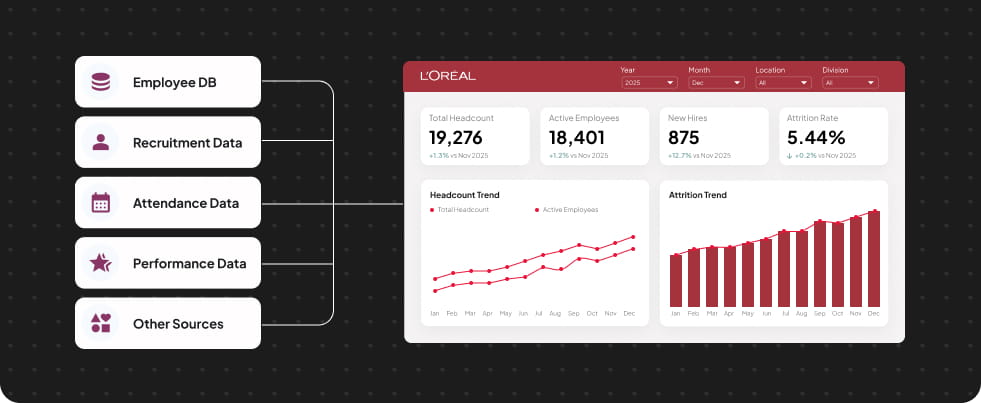
Integrated scattered employee records into a centralized SQL-based source for clean, structured, and analysis-ready reporting.

Interactive Workforce Dashboard

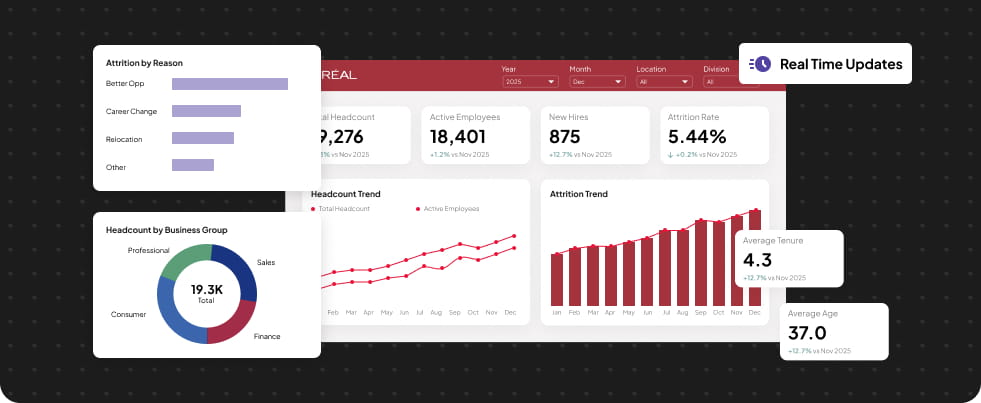
Built a real-time Power BI dashboard enabling HR teams to monitor workforce KPIs, trends, and planning insights efficiently.

2

Dynamic Analytics Experience Layer

Smart KPI Personalization

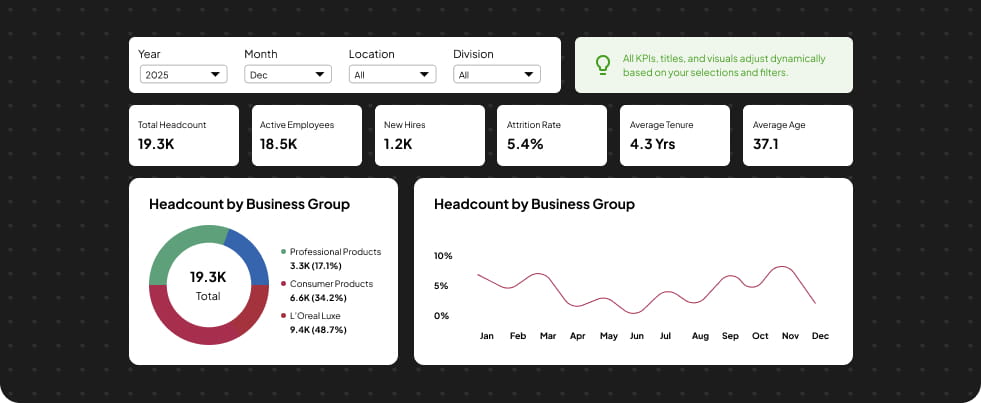
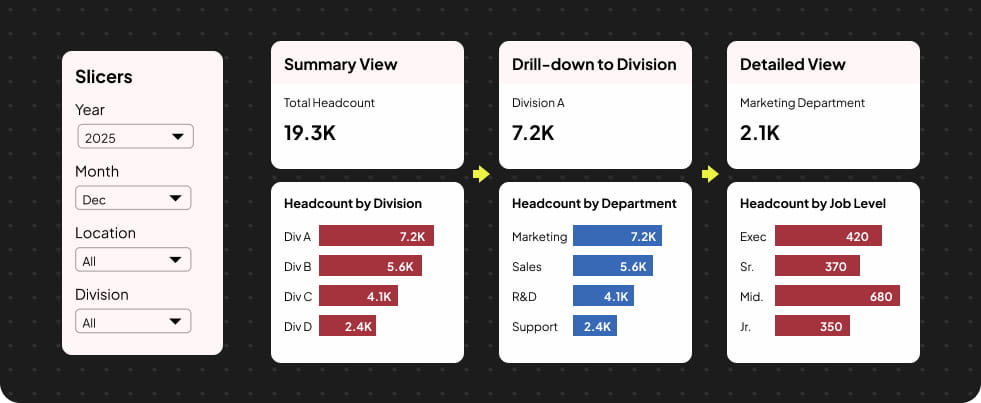
Implemented dynamic logic to automatically update KPIs, titles, names, and visuals based on user selections and filters.

Advanced User Navigation

Enabled drill-downs, slicers, bookmarks, and cross-filtering for seamless movement from summary metrics to detailed insights.

Explore more. Additional features.

Trend Analysis

Tracked YTD, MoM, YoY, and rolling period changes for headcount, attrition, and workforce movement.

Workforce Segmentation

Analyzed employee demographics, tenure, and experience levels to understand workforce composition and stability.

Visual Insights

Used charts, maps, and conditional formatting to highlight risks, changes, and performance patterns instantly.

Secure Access

Applied role-based security controls to ensure sensitive employee information remained protected and restricted.

Tech Stack

Outcome

Outcome Summary

Cost Optimization

30% reduction in software licensing and vendor overhead by eliminating third-party tools and unifying systems.

Operational Efficiency

70% improvement in productivity due to seamless workflows, centralized administration, and intelligent automation.

Faster, Custom Analytics

Transitioning to a custom PHP-based reporting engine enabled faster data processing, real-time dashboards, and flexibility that Power BI could no longer support

Unified Experience

A single login, centralized data layer, and consistent UI made it easier for teams across departments—especially in training, billing, and client management—to collaborate and stay aligned.