AI in Healthcare Data Management: Building Secure and Seamless Data Pipelines
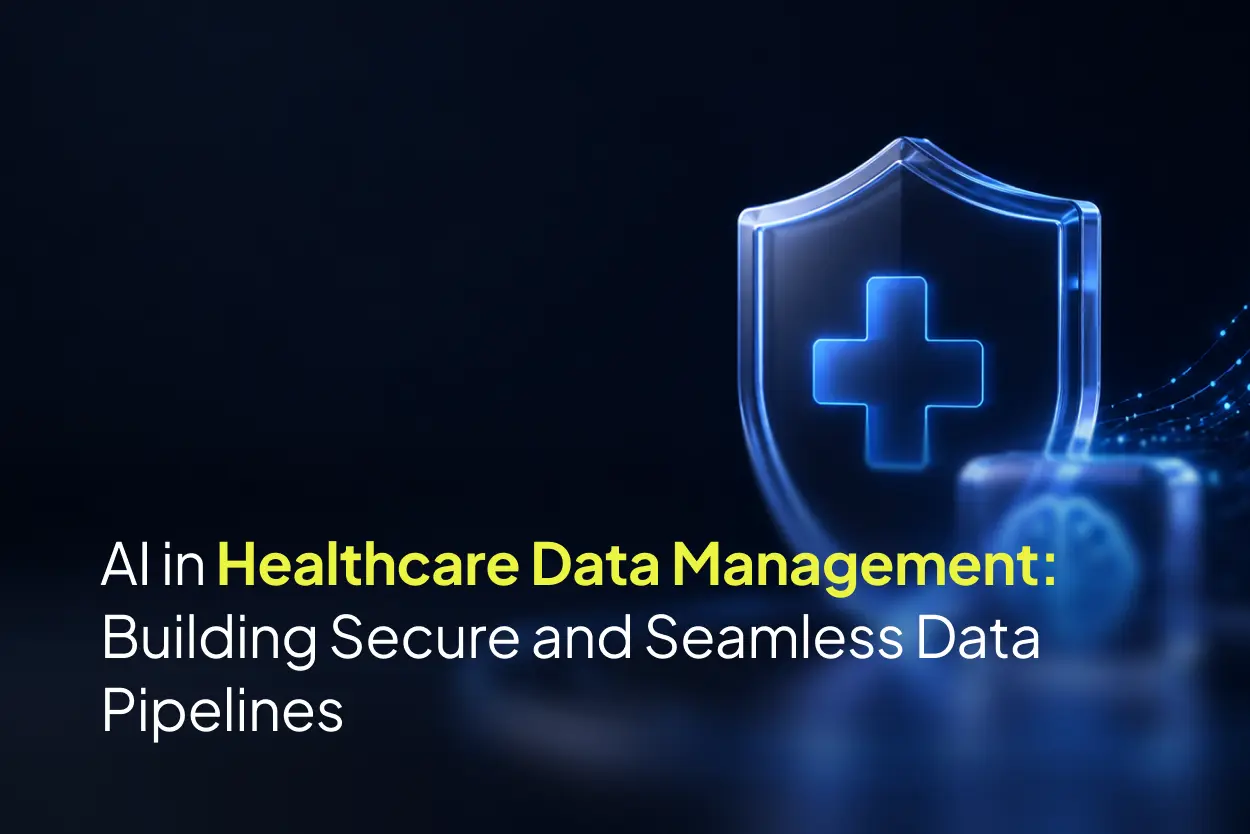
Healthcare generates the most data annually. It comes from new sources of information like Electronic Medical Records, wearable devices, and telemedicine records, among others. However, many hospitals are unable to leverage it to enhance patient care and operational efficiency. There are various reasons for this. A large amount of this data is unstructured, while structured data is trapped in siloes. Consequently, it’s very difficult to access and share it.
AI in healthcare data management promises to remove all these obstacles. By creating efficient healthcare data pipelines, it offers several benefits to both patients and providers.
Let’s explore how AI can positively impact data management in healthcare.
The Healthcare Data Deluge
Healthcare accounts for 30% of global data. This exceeds any other industry. By the time you read this, the sector will likely be generating 10,000 exabytes of data! To make it clearer, 10,000 exabytes can practically fill over 40 trillion books!
It’s easy to understand why data is powering healthcare. By 2025, an average individual is expected to use digital devices for over 4,909 times per day. A large part of these interactions is linked to telemedicine and health tracking.
The healthcare data explosion refers to an ever-expanding number of data sources and volumes. These come from wearables, smartphone apps, connected medical devices, EHRs, and genomic research programs. Healthcare is evolving by leaps and bounds due to new technologies. As a result, healthcare companies are seeing an enormous increase in the data they collect.
“It’s a battle to access and utilize the digital representation of the world’s health and wellness.”
– Andrew Callaway (Global Head of Healthcare Investment Banking at RBC Capital Markets)
Healthcare is one area where there’s a need to turn data into useful insights. However, many businesses are still sitting on top of a data goldmine without realizing it. If properly managed, the vast network of databases can enhance the entire healthcare ecosystem. This is exactly where AI healthcare solutions step in. It is the main tool in the context of efficient healthcare data management. AI’s various applications can help organizations use patient data to its fullest potential
Challenges of AI in Healthcare Data Management
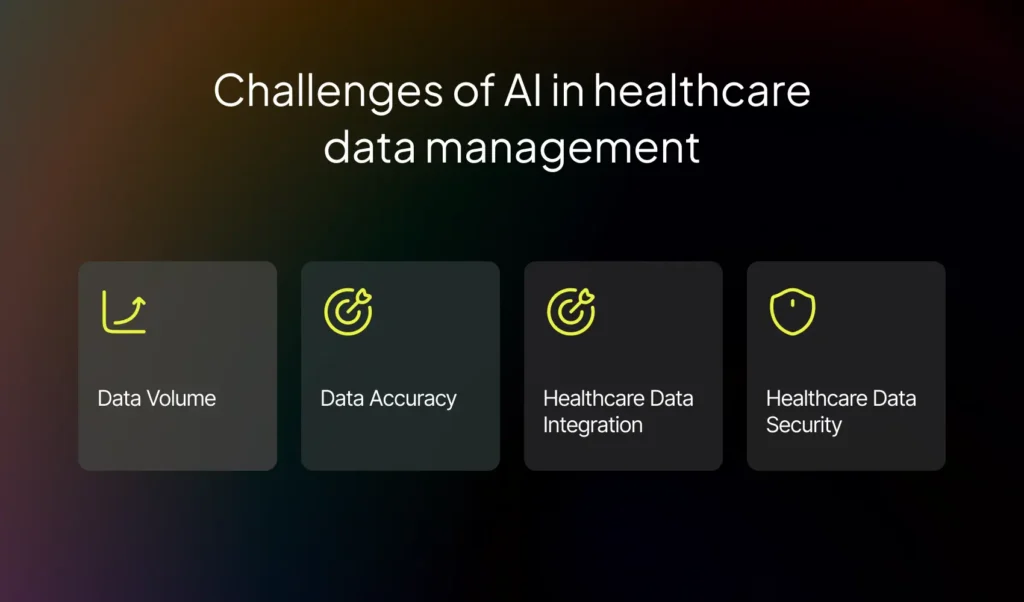
Managing medical data is a big challenge for hospitals. They handle huge amounts of patient records, care plans, and medical histories every day. Conventional methods have never been able to give the desired results. Let’s look at the key challenges of healthcare data management.
Data Volume
Healthcare activities generate enormous volumes of data. This data grows daily. It comes in the form of structured and unstructured data. A few examples of structured data are coded entries and numerical values. Unstructured data includes medical imagery and clinicians’ notes. Conventional data management systems cannot handle this diversity efficiently.
Data Accuracy
Data accuracy poses another crucial challenge. Manual data entry and its processing are rife with errors. As a result, it can lead to serious issues in patient billing and care. Inaccurate data makes the doctor commit grave mistakes like wrong treatments and misdiagnosis. This lowers patient care quality.
Healthcare Data Integration
Traditional methods often fail to integrate healthcare data properly. Providers use numerous platforms and databases. Thus, it becomes challenging to aggregate data into a centralized view. It leads to data fragmentation. Consequently, it hampers efficient data access and analysis. This, in turn, causes delays in decision-making. It also prevents providers from gleaning insights from data.
Healthcare Data Security
Healthcare facilities must adhere to HIPAA rules. They need to protect patient data using administrative, physical, and technical checks. Following all these compliance needs is certainly challenging. Lack of data quality and discovery issues make it hard for companies to perform the required audits. Thus, it hinders providers from tapping into the full potential of health data. Old data management methods have weak security. This raises the risk of data loss and costly non-compliance fines.
Overwhelmed by Healthcare Data Complexity?
How AI Transforms Healthcare Data Management?
Healthcare associations and services produce enormous amounts of structured and unstructured data. The number of clinical records, imaging, lab reports, device feeds, billing, and more is increasing quickly. AI is paving the way to process it intelligently and make manual processes more efficient. AI healthcare solutions help utilize steadily growing data for better patient outcomes and efficient operations. Its use reduces errors and, consequently, costs.
Benefits of AI in Healthcare Data Management
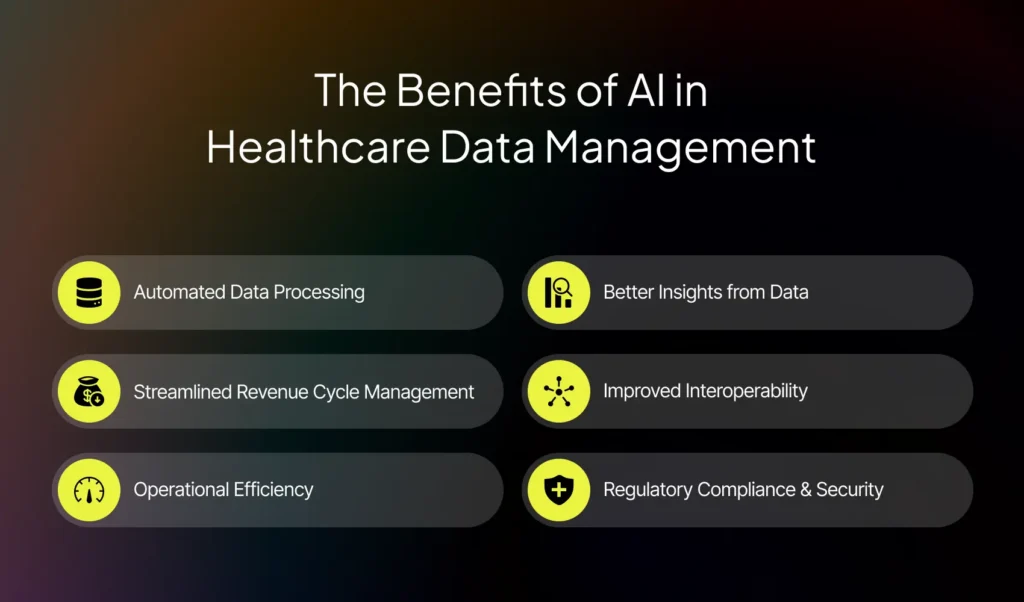
AI in healthcare data integration contributes to value-based, efficient care in the following ways:
Automated Data Processing
- AI healthcare solutions deploy intelligent bots to extract and validate patient records from varied sources. These include EHRs, labs, and devices, which would otherwise need a lot of manual work. The use of AI not only automates error-prone processes but also ensures healthcare data security.
- The AI healthcare data pipelines developed by custom healthcare software development services detect and correct inconsistencies (duplicate records, missing fields) automatically.
- Natural Language Processing (NLP) engines convert unstructured clinical notes into structured data. Thus, it improves healthcare data integration across systems.
- Custom AI healthcare solutions automate tagging of diagnoses, medications, and procedures for better searchability within HIPAA-compliant data management frameworks.
Better Insights from Data
- Machine learning models analyze historical patient data continuously. In doing so, they forecast readmission risks and progression of diseases.
- AI in healthcare data management flags high-risk patients, and, thus, supports early intervention by clinicians.
- AI finds out hidden correlations between treatments and outcomes. Consequently, personalized care plans can be developed.
- AI in healthcare data management identifies population health trends. For example, data sets from EHRs and wearables can unveil emerging infection clusters. AI analyzes these datasets to surface these trends.
Streamlined Revenue Cycle Management
- AI-driven RCM (Revenue Cycle Management) systems are a part of end-to-end healthcare software development services. These solutions verify insurance eligibility, submit claims, and scrub denials. All of this happens without human intervention.
- The solutions lower errors related to billing and quick reimbursements. They strengthen overall healthcare data security.
- AI bots handle real-time authorization requests. Hence, approval times reduce from days to hours and positively affect care delays.
- The use of AI in healthcare data management reduces administrative burden on the staff. Simultaneously, it optimizes cash flow through simplified AI healthcare data pipelines.
Improved Interoperability
- AI standardizes data exchange. It maps and normalizes data to FHIR and other industry standards. So, the flow of information among hospitals, labs, and payers is timely.
- The technology creates up-to-date patient records across systems.
- Continuous monitoring of updates across platforms keeps all stakeholders updated.
- AI provides access to the latest clinical information, all of which is backed by HIPAA-compliant data management.
Operational Efficiency
- AI healthcare solutions like chatbots reduce workload by taking care of several things at once. Some instances are managing bookings and reminders, and follow-up communications.
- The NLP interfaces enable patients to self-schedule or update appointments.
- Examples of AI in healthcare software development, like virtual assistants and digital teammates, automate repetitive tasks. These include data routing, report generation, and more.
Regulatory Compliance & Security
- AI logs all data access and modifications in compliance with HIPAA. Thus, it supports HIPAA-compliant data management and audit readiness.
- The tools create real-time compliance reports that eliminate the complexity of regulatory audits and risk assessments.
- Machine learning models help with anomaly and threat detection. They analyze access patterns to detect breaches or unauthorized activity, thus reinforcing healthcare data security.
Your AI-Powered Healthcare Data Transformation Starts Here
AI in healthcare data management creates a connected ecosystem that ultimately enhances care quality. With automated data processing to compliance monitoring and more, it makes it possible for hospitals to build intelligent data pipelines.
Healthcare data grows daily. As a result, a majority of hospitals still struggle with data complexities. If you are one of them, Imenso Software can help. Our healthcare software development services enable businesses in this sector to benefit from secure and compliant solutions. Partner with us to leverage cutting-edge healthcare software. It’s time to revolutionize your operational efficiency and patient experiences.
Ready to Build Secure, AI-Driven Healthcare Data Pipelines?


Similar Posts
Healthcare Platform Modernization: A Guide to Replacing Legacy Systems
The healthcare industry relies heavily on technology to deliver high-quality care. Still, many healthcare businesses rely on legacy platforms for critical operations. These compromise data security and operational processes. Modernizing them is thus crucial to support better patient outcomes. In this blog, we’ll go over how legacy platforms hamper patient and provider experiences. Then, we’ll […]...
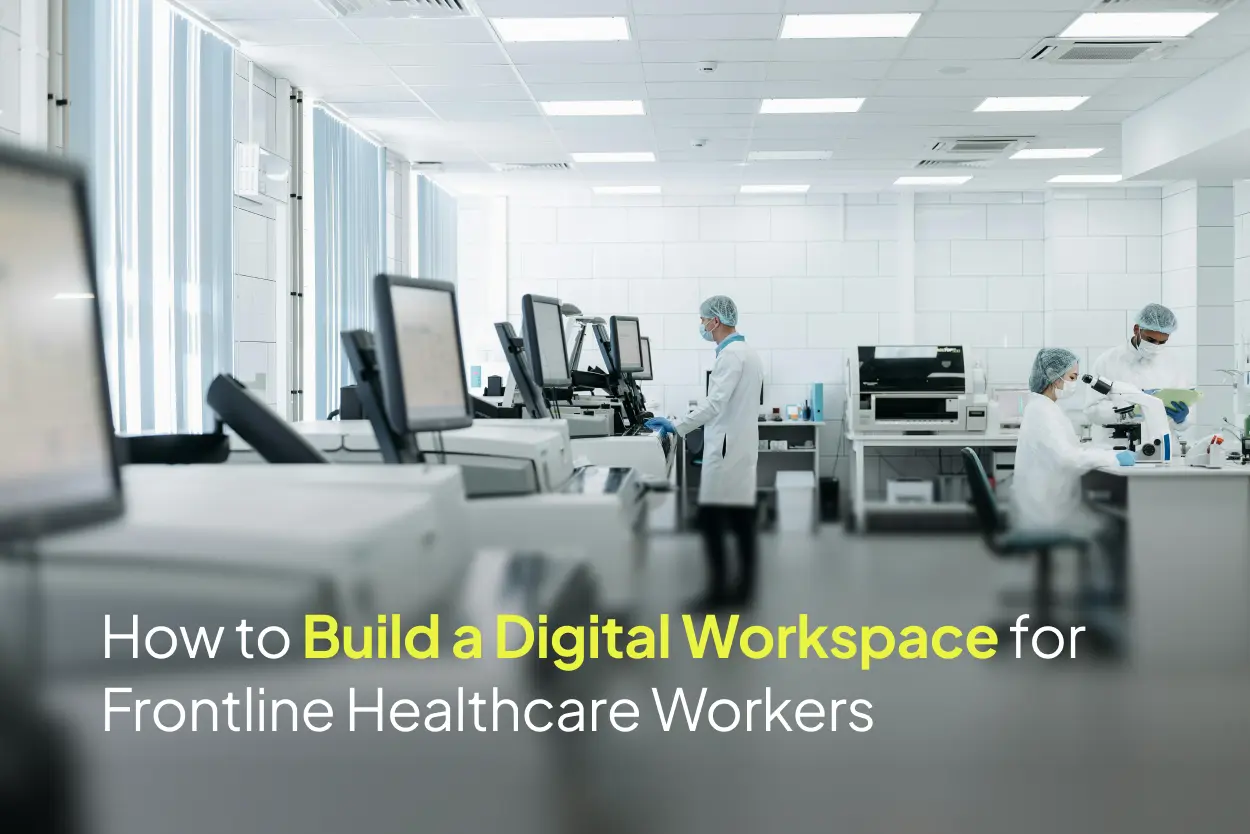
How to Build a Digital Workspace for Frontline Healthcare Workers
There are over 2 billion frontline workers globally. Their number far outnumbers that of knowledge workers. Surprisingly, technology has done little to improve their lives compared to white-collar employees. The benefits of a digital workspace go way beyond growth in business revenue. Digital solutions also boost worker productivity and job satisfaction. Frontline workers have largely […]...

AI in Healthcare – Transforming the Future of Medicine
Quick Summary The AI in healthcare industry is unlocking possibilities we couldn’t have imagined a decade ago. It analyzes scans in seconds, predicts patient risks before symptoms appear, and helps design life-saving drugs with generative AI in healthcare. This amplifies their skills to enable more accurate, affordable, and personalized care. Artificial Intelligence is quietly […]...