Real-Time Inventory Management with Power Apps

Book a Call

About Client

Healthcare/Fintech USA

About Client

The client operates one of India’s largest multi-regional warehouses, logistics and supply chains, managing large-scale equipment deployment, on-ground vendor coordination, and facility dispatch operations.

Problem Statement

Manual Data Entry & Excel Logs

Without any dedicated inventory management application, many tasks related to the inventory, such as data entry, stock replenishment, and order processing, were manually performed. Dispatches were logged in Excel sheets with no version control, leading to data loss and errors.

Lack of Visibility on Field Operations

There was no mechanism to know what was dispatched, by whom, and when it was received at the destination. Due to this, it was difficult to fulfil the orders in a timely manner.

Mismanaged Inventory

Inventory was not being managed accurately due to the absence of a specific system to monitor stock levels. This resulted in shortages, overstocks, incorrect product counts and eventually loss of sales or higher transport costs.

No Real-Time Status Updates

The central team had no real-time updates for dispatched vs received items, making it difficult to plan downstream activities.

Unverified Handovers

Absence of physical proof (signatures, timestamps, images) at the time of delivery opened room for SLA breaches and vendor disputes.

Reporting Delays

MIS teams had to manually compile reports from Excel and field calls, slowing down decision-making and reconciliation.

Without any dedicated inventory management application, many tasks related to the inventory, such as data entry, stock replenishment, and order processing, were manually performed. Dispatches were logged in Excel sheets with no version control, leading to data loss and errors.

There was no mechanism to know what was dispatched, by whom, and when it was received at the destination. Due to this, it was difficult to fulfil the orders in a timely manner.

Inventory was not being managed accurately due to the absence of a specific system to monitor stock levels. This resulted in shortages, overstocks, incorrect product counts and eventually loss of sales or higher transport costs.

The central team had no real-time updates for dispatched vs received items, making it difficult to plan downstream activities.

Absence of physical proof (signatures, timestamps, images) at the time of delivery opened room for SLA breaches and vendor disputes.

MIS teams had to manually compile reports from Excel and field calls, slowing down decision-making and reconciliation.

Solution

Solution
1

Smart Inventory Operations

2

Automated Logistics Workflow

3

Secure Analytics & Governance

Solution
1

Smart Inventory Operations

Centralized Inventory Dashboard

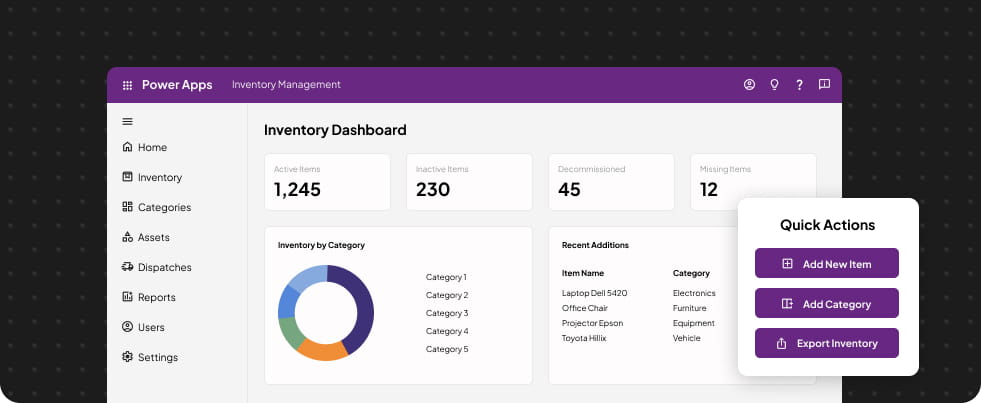
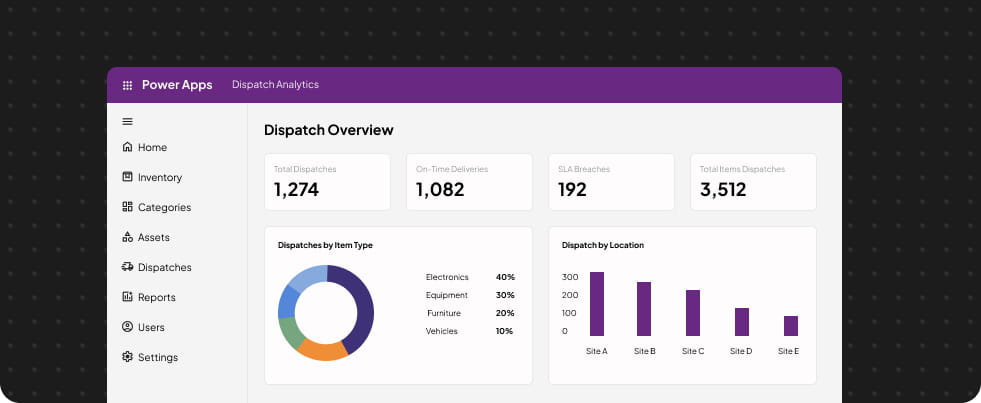
A unified dashboard was developed to provide real-time visibility into inventory status across multiple categories including active, inactive, decommissioned, and missing assets. The system also allows users to easily add new products, asset categories, and inventory records through a simple input-driven interface.

Mobile-First Dispatch Management

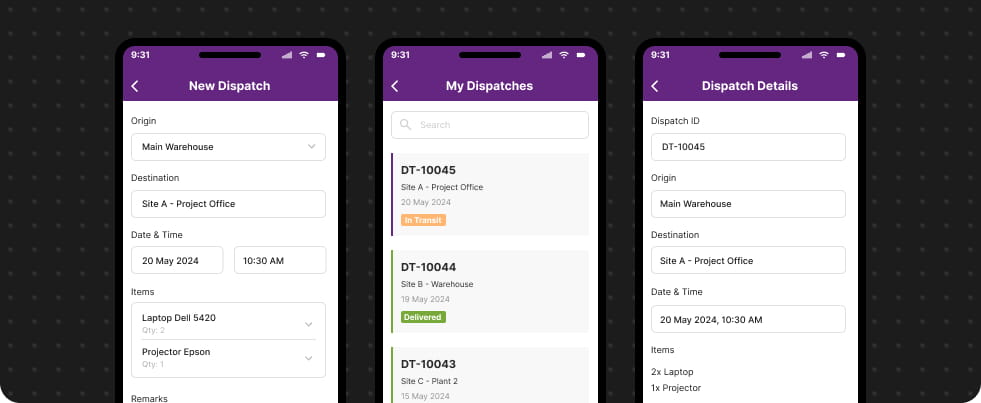
The Power App-based dispatch module enables field technicians to create dispatch tickets with origin, destination, timestamps, item details, and remarks directly from mobile devices. Designed with a touch-first interface, the application ensures smooth adoption for on-ground teams with minimal training requirements.

2

Automated Logistics Workflow

Intelligent Vendor Communication

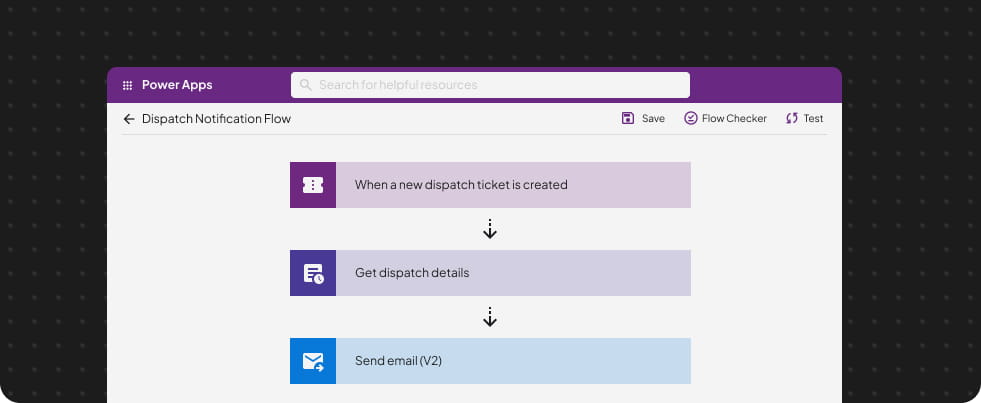
Using Power Automate and Outlook 365, the platform automatically sends dispatch notifications to vendors whenever a ticket is created. Emails include dispatch summaries, sender details, organization IDs, and support customized communication formats for different vendor groups.

Digital Proof of Delivery

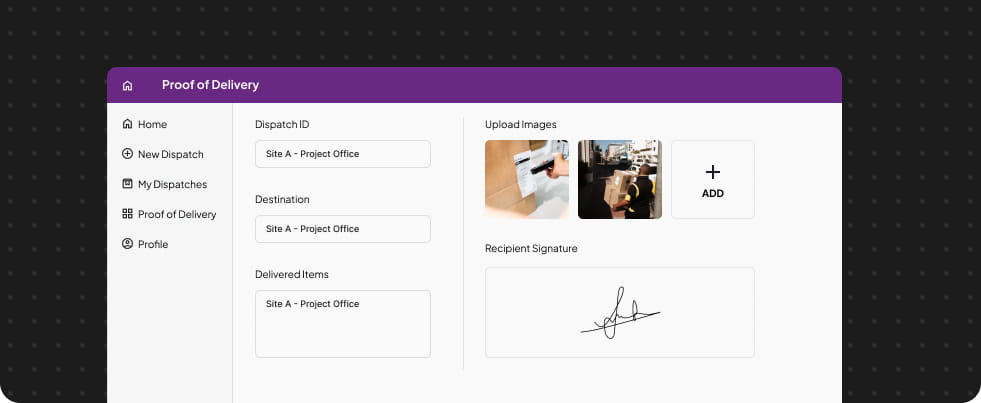
The solution includes a built-in proof of delivery module where field users can upload dispatch images, capture transporter signatures digitally, and record timestamps for audit purposes. All delivery data is synchronized directly into the centralized reporting environment for complete operational traceability.

3

Secure Analytics & Governance

Real-Time Operational Insights

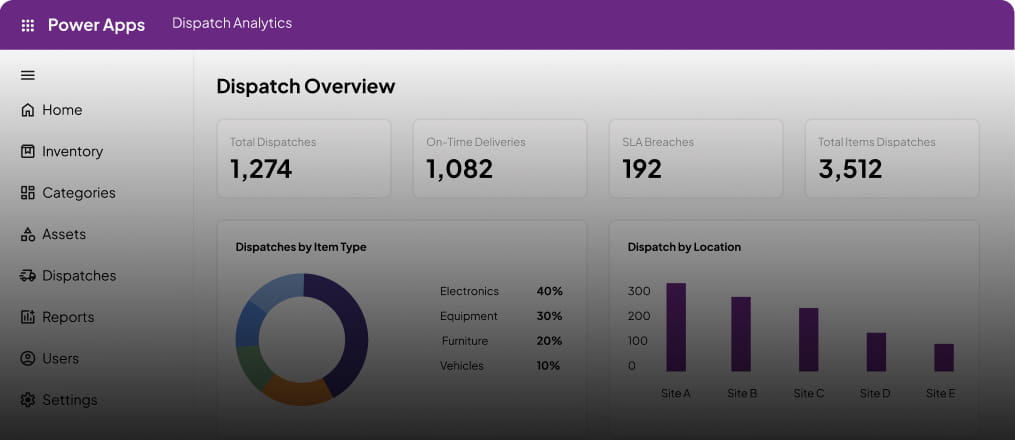
Integrated Power BI dashboards provide live analytics on dispatch volumes, delivery performance, SLA breaches, user activity, and operational costs. Reports can also be exported in formats such as PDF and Excel for management and CXO-level review.

Role-Based Access Control

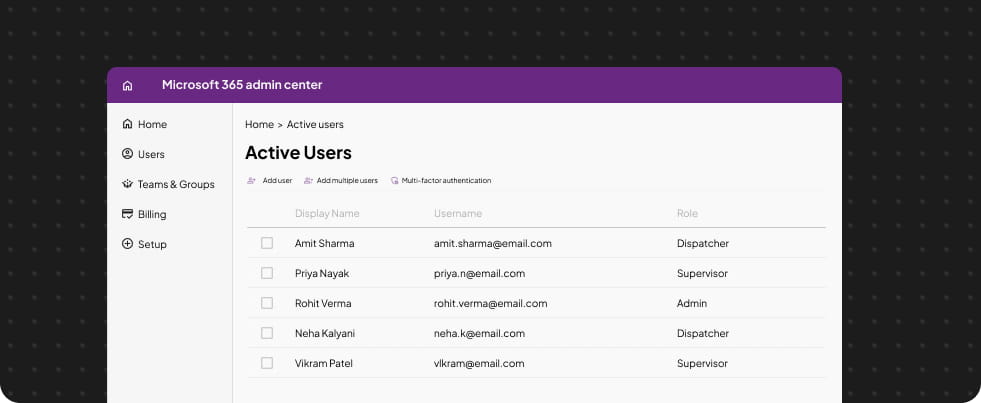
The platform was designed with enterprise-grade security using Microsoft Azure standards. Users are categorized into Dispatchers, Supervisors, and Admins, while every action is logged with user details, timestamps, and source information to support compliance and zero-trust security environments.

Tech Stack

Outcome Summary

60%

Visibility improved by over 60%, enabling better demand forecasting

Automation

Vendor Communication became automated and auditable end-to-end

SLA Compliance

SLA Enforcement improved through timestamped logs and alerts

40%

Dispatch Logging Time reduced by 40% with mobile-first workflows

80%

80% reduction in report preparation time thus increasing efficiency

Conclusion

By leveraging Microsoft’s low-code stack, Imenso delivered a scalable, auditable, and realtime dispatch management platform—transforming manual processes into automated and insight-rich workflows.