Healthcare Mobile Apps & Technology: Changing The Face Of Patient Care

In 2024, over 3 million healthcare mobile apps were downloaded in the U.S. That’s nearly a 50% rise from last year. Every year, more people use these apps as they see their usefulness for better health gains.
Healthtech is transforming how patients receive care. Intelligent digital tools allow doctors to gather more data. As a result, they can make precise diagnoses. This consequently allows them to develop tailored interventions.
mHealth apps help patients keep a tab on their health. They thus play a proactive role in improving their well-being.
This blog explores key ways in which digital health apps empower providers and patients.
What Is Healthcare Technology?
Healthcare technology comprises the systems, applications, and tech architecture that improve all aspects of healthcare. This includes diagnosis, treatment, check-ups, medical history, and more. The technology makes care more convenient and efficient.
Patients can talk to a doctor from anywhere via digital health apps and can schedule online consultations. Electronic health records give instant visibility into patients’ conditions and drugs. Thus, both patients and doctors have the right information at their fingertips.
3 Major Types of Technologies for Enhancing Healthcare
Various types of technologies improve care. A healthcare app development company uses the latest advances to create custom healthcare software. Below are three of the leading technologies that are extensively leveraged.
AI Technology
Artificial intelligence analyzes complex data from healthcare devices. Then, it generates insights that improve clinical decisions. AI algorithms help physicians spot patterns when assessing test results. The algorithms can identify meaningful data. As a result, clinicians can make precise care decisions. The data patterns insights by AI can eliminate the inefficiencies in work processes arising from siloed data and platforms.
Blockchain
Blockchain systems record and distribute transactions across a shared network. Participants can see the data of the stored information of transaction history in digital ledgers. Blockchain improves data interoperability across various platforms by offering secure networks. Hospitals using blockchain benefit from advanced data sharing on encrypted, decentralized networks. Thus, it enables them to provide better services.
Cloud Computing
Cloud computing stores huge volumes of health data in remote servers. It gives organizations the flexibility to manage data transfer across IT platforms. This helps improve work processes. Organizations can easily maintain data storage. Thus, it improves the maintenance of EHRs. With cloud technology, clinicians can quickly see and share crucial data across the care ecosystem. As a result, the patient gets a better experience.
What Are Healthcare Mobile Apps (mHealth Apps)?
Healthcare mobile apps are downloadable online applications that patients can use to manage their conditions. Digital health apps help people keep a tab on their health. They can easily fix online check-ups if needed. Users can manage chronic conditions through self-monitoring, alerts, and remote follow-ups.
The apps can also be built to support public health and wellness goals. Regular activity and hydration reminders and progress check-ins in an app make it a great health buddy for common health-conscious but busy people.
How Healthcare Mobile Apps Benefit Healthcare Providers?
Healthcare mobile apps simplify the workflows of providers and healthcare workers. They save their time, reduce errors, and improve collaboration. Your medical teams can work from anywhere without stressing about data security. Here’s how they are advantageous for hospital staff:
1. Reduced Charting Time & Duplication
Patient care mobile apps with EHR integration significantly reduce charting time. The provision of simplified workflow and templated documentation allows healthcare providers to access and update patient information from mobile devices. Hospital staff can view labs, notes, and care plans on the go. In fact, A 2025 JAMA Network Open study and system press releases show that ambient AI documentation tools linked to the EHR lowered clinician burnout within weeks!
2. Early Intervention Through Remote Monitoring
mHealth apps allow remote monitoring of patients. So, hospital staff can intervene promptly. The apps are connected with home devices and stream vitals and symptoms to care teams. Through agile technologies for mobile health security, these digital health apps keep track of blood glucose levels, pulse meters, oxygen levels, and more. The caregiver does not need to worry about physical follow-ups with the patients. When this is paired with education and follow-ups, the likelihood of hospital readmissions is greatly reduced.
3. Better Care Accessibility
Digital health apps, like telemedicine apps, extend healthcare access and continuity by eliminating the burden of commuting. Clinicians can expertly deliver follow-ups and coaching. According to the U.S. national health statistics report, sustained telemedicine use is tied to EHR since the pandemic. It also supports hybrid care models that are efficient for healthcare organizations.
To gain these advantages, hospitals should partner with a reliable technology provider. An experienced healthcare app development company can comprehend each clinic’s workflows and compliance criteria. They can build scalable mobile solutions that connect patient care apps, telehealth, and remote monitoring with fluid EHR integration.
Planning to Build a Healthcare Mobile App?
How Healthcare Mobile Apps Transform Patient Care?

Healthcare mobile apps are reshaping patients’ interaction with medical services. From improving access to care to enhancing patient engagement, these apps make care remarkably effective. Below are four major ways these apps benefit patients.
1. Improved Access to Healthcare Services
Healthcare mobile apps allow patients to access medical services whenever they need. They can fix appointments, get test results, or consult with doctors via video calls. Patients don’t need to visit the facility physically. mHealth apps enable patients in remote areas or those with limited mobility to get convenient care. That’s why, increasingly, more hospitals are investing in custom healthcare app development. With these services, they can get personalized solutions tailored to their patient’ needs.
2. Enhanced Patient Monitoring and Support
Remote monitoring apps help people with chronic conditions remain connected with their doctors between check-ups. These mobile tools record vital signs, drug use, and health indicators. This enables providers to respond quickly. They can offer timely care. This ongoing monitoring improves outcomes. Remote tracking features support continuous patient care.
3. Seamless Health Data Management
EHR integration in apps keeps patient data updated. This data also remains accessible for both patients and providers. It organizes records in a safe and user-centric way. Thus, there are fewer chances of errors. EHR integration also improves the efficacy and quality of patient care across the care landscape.
4. Increased Patient Engagement and Empowerment
Patient engagement helps improve therapy results. Modern mHealth apps include features like medication reminders, appointment alerts, and symptom sign checkers. These tools help patients stay aware of their health status. As a result, they understand their health better. This lets them take the right action to manage their condition.
New Trends in Healthcare Mobile Apps

Healthcare mobile apps are quickly adopting new technologies for more personalized care. The use of 5G, gamification, and geofencing is altering patients’ connection with their doctors for the better. Here are five key healthcare technology trends that are elevating digital patient care.
1. 5G-Powered Healthcare Apps
5G will power the future of healthcare mobile apps. The technology has reduced network latency by 80% over 4G. It has brought average internet speeds between 1 and 10 Gbps. As a result, it has become easier to integrate telemedicine with digital health apps. 5G makes way for high-volume, quick data exchange, improving healthcare significantly. For example, a high-resolution image (1GB MRI scan) can be transmitted within seconds, a thing that is crucial for consultations and remote diagnostics. It allows smooth sharing of big imaging files and online video consultations. All of this gets done with extreme clarity and ongoing patient data streaming from wearable digital devices.
2. Conversational AI and Voice Assistance in Healthcare Mobile Apps
AI chatbots in mHealth apps are handling almost 30% of daily patient inquiries. This has dramatically cut wait times. It has also reduced administrative load. The voice models answer patient queries with high accuracy. Voice assistants don’t just assist with quick responses to routine inquiries. They enable functions like medicine alerts and managing connected health devices.
Voice-assisted technology makes manual interaction with mobile devices easy. Thus, it is highly beneficial for the elderly and physically disabled. For these users, manual interaction with mobiles is often challenging. Now, they can use simple voice commands to fix online consultations or get real-time health alerts.
3. Gamification to Boost Patient Engagement
Gamification in healthcare software development enhances patients’ well-being. Health apps with features like leaderboards, points, and challenges boost patient engagement. They help them adhere to treatment, enhancing clinical outcomes. The benefit of gamification goes beyond treatment adherence. They spark deep behavioural shifts. It has been shown that integration of gaming into nutrition and exercise supports long-term self-management interventions. They also promote preventative behaviours during public health emergencies.
4. AI-Driven Digital Therapeutics
Digital therapeutics are software-based treatments. They pave the way for highly precise and personalized drug treatments. It relies on sophisticated AI architectures in patient care mobile apps. The market for DTx is expected to reach USD 10.09 billion by 2029. The technology has various applications. These help with
- Non-invasive glucose monitoring for diabetics to continuously track their sugar levels.
- Detection of early signs of heart issues in patients with high blood pressure.
- Analyses of biometric data like heart rate and skin response.
- Prediction of mood changes in patients with anxiety and depression.
5. Geofencing for Location-based Healthcare Services
Geofencing technology enables custom healthcare app developers to configure location-based actions. It closes the gap between digital health apps and real patient needs. Features like interactive street navigation and nearby service recommendations make healthcare more accessible. Automated notifications and appointment check-ins with geofencing improve clinician-patient engagement. Increasingly, providers are using healthcare mobile apps with geofencing to automate:
- Patient check-ins
- Sent area-based appointment alerts
- Enhance emergency response times
- Make care coordination with real-time location updates to providers via AI-driven scheduling better.
Innovative Healthcare Software for Better Outcomes and Efficiency
The aim of technological advancement in healthcare is to improve patient care and operational efficiency. If you’re a healthcare business looking to use technology to enhance outcomes and simplify workflows, Imenso Software is here to help.
As a leading healthcare app development company, we help providers manage patient data safely and stay compliant. Our solutions also allow patients to access quality care right from their homes. This paves the way for more efficiency and accuracy in clinical settings. It ultimately leads to better patient outcomes. Connect with us today to discuss your software vision.
Ready to Build a Smarter Healthcare Mobile App?

Similar Posts
AI Implementation in Healthcare Software
Have you noticed how AI is silently changing modern healthcare? What once seemed like science fiction is now a normal part of hospitals. The tools we imagined ten years ago are now helping doctors treat patients more effectively every day. Technology has helped care institutions to incorporate smart supporting systems that can filter through thousands […]...

How Can Small Business Cope With The Long-Term Effects Of Covid-19?
The Covid-19 crisis has been disruptive for many businesses, but the SMBs have had the major burn of all. There has been some relief in 2021 as the vaccines are here, and the lockdown has been removed. But things are still far from ordinary. And according to experts, it can be until august 2021 to […]...
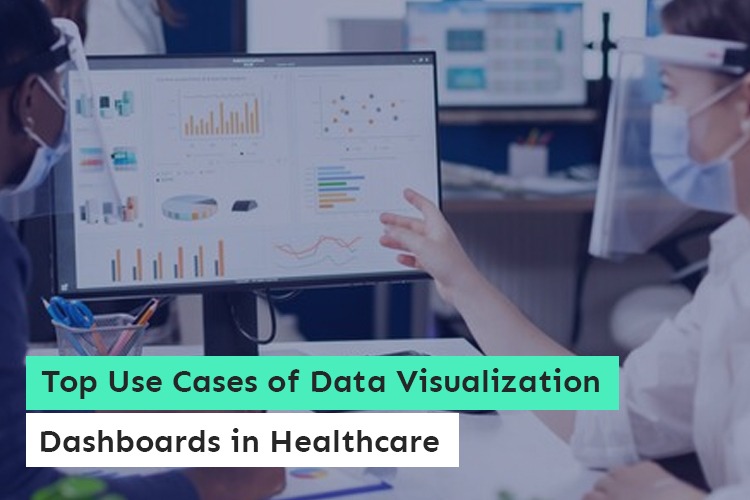
Top Use Cases of Data Visualization Dashboards in Healthcare
The human eye is naturally drawn to pictures more than text lists. Therefore, it is not an exaggeration to claim that data science visualizations in healthcare are essential for saving lives. The healthcare sector is being shaken up by big data. Simply put, data visualization is the practice of displaying data graphically, such as through […]...