AI Healthcare Trends 2026: From Predictive Care to Automated Clinical Workflows
AI in healthcare has already shown much promise. In the upcoming year, it will be put to much greater test. The most notable innovations will be seen around predictive care and clinical decision-making. The end goal for the year is the same as before. It is to improve the clinician and patient outcomes.
One thing is for sure. AI won’t be relegated to a single function or a group of functions. Since speed and accuracy matter to all healthcare functions, AI will play a decisive role everywhere. Healthcare custom software development will power the increasing adoption of AI. Let’s explore every emerging AI trend in detail.
Trend 1: Predictive Care Systems Embedded Across Clinical Operations
Perhaps the biggest impact of AI will be seen in predictive systems. They will become integrated tools focusing on real-time, tailored care. The care will be given via edge computing, wearables, and more. It is set to serve as a forward-looking tool. The goal is to optimize patient and operational outcomes. By 2026, these systems will support early clinical intervention at scale.
Predictive Care in Daily Clinical Practice
Hospitals integrate predictive models directly into electronic health record platforms. These models process vitals, lab results, medications, and prior outcomes. Risk scores update continuously as new data becomes available.
Care teams receive alerts highlighting patients with rising clinical risk. Earlier intervention helps prevent complications and reduces avoidable admissions.
Technology Foundations Behind Predictive Care
Predictive platforms rely on advanced healthcare custom software development. Systems connect EHRs, monitoring devices, and analytics engines securely. Custom workflows align predictions with escalation and response protocols.
As models evolve, modular architecture allows smooth updates. This structure supports accuracy, compliance, and long-term reliability.
Trend 2: Clinical Decision Support Becomes Real-Time Intelligence
Clinical decision support will advance into live intelligence. Static rule-based alerts have become a thing of the past. In the coming year, healthcare systems will keep learning from patient records. They will then deliver personalized insights exactly where they’re needed.
AI Decision Support at the Point of Care
Clinicians see ranked treatment options inside existing workflows. Each recommendation includes outcome projections and risk indicators. Updates appear instantly when patient data changes.
Emergency departments benefit from faster triage decisions. AI highlights patients requiring immediate attention based on severity patterns.
Product Development Considerations for Decision Support
Strong healthcare software product development enables these capabilities. Explainable models remain essential for clinician trust. Each recommendation includes transparent clinical reasoning.
Interfaces stay simple to avoid workflow disruption. Clear design supports adoption across multidisciplinary teams.
Trend 3: Automated Clinical Documentation Reduces Administrative Work
Clinical documentation continues to burden healthcare professionals. AI automation is easing this pressure across care settings. By 2026, documentation will occur largely during patient interactions.
How Documentation Automation Works
Speech recognition captures conversations during patient visits. AI converts spoken language into structured clinical notes accurately. Diagnoses, symptoms, and care plans populate automatically.
Clinicians review drafts instead of typing notes manually. Discharge summaries are generated immediately after care completion.
Design Requirements for AI Documentation Tools
Effective automation depends on tailored healthcare custom software development. Organizations follow different documentation standards and compliance rules. Custom engines adapt outputs to internal governance requirements.
Accuracy remains critical for patient safety. Balanced design supports efficiency without compromising reliability.
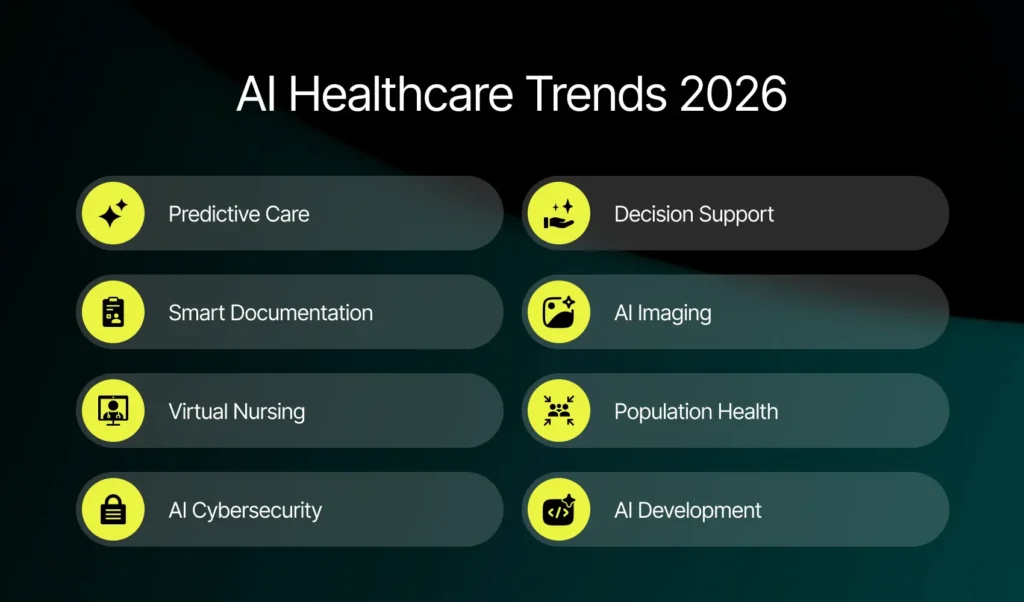
Trend 4: AI-Powered Medical Imaging Delivers Longitudinal Insight
Medical imaging platforms are advancing beyond simple detection tasks. AI systems now analyze disease progression over time. In the following year, imaging AI will provide a richer diagnostic context.
Advanced Imaging Capabilities in Practice
Radiologists receive alerts highlighting subtle progression trends. Visual overlays draw attention to areas requiring closer review. Case prioritization improves based on urgency indicators.
Cancer screening programs gain more consistent early-stage detection. False negatives decline as models learn from longitudinal data.
Platform Development Needs for Imaging AI
Imaging solutions rely on advanced healthcare software product development frameworks. High-resolution images require fast processing and secure storage. Low latency remains essential for clinical usability.
Custom integrations link imaging data with patient histories. This unified context supports stronger diagnostic decisions.
Exploring AI for Your Healthcare Platform?
Trend 5: Virtual Nursing Assistants Extend Hybrid Care
Virtual nursing assistants won’t remain mere chatbots in 2026. They will evolve into integrated AI agents and clinical copilots. These assistants will become central to hybrid care models. Their main tasks will be to automate routine tasks and optimize remote patient monitoring. Put simply, they will support patients throughout their care timeline.
Patient Engagement Through Virtual Nursing
Patients receive medication reminders and daily symptom check-ins. AI monitors responses and flags concerning patterns early. Escalation to human nurses occurs when defined thresholds are met.
Chronic care patients feel supported between appointments. Consistent engagement improves adherence and satisfaction.
Development Strategy for AI Nursing Assistants
Virtual nursing tools rely on healthcare custom software development for personalization. Each assistant follows provider-defined care pathways. Language tone adapts to patient preferences and accessibility needs.
Secure communication protects sensitive health information. Integration with clinical teams remains seamless and dependable.
Trend 6: Predictive Population Health Management
Population health platforms are moving beyond retrospective reporting. AI-driven systems forecast trends across large patient populations. By 2026, population health insights will guide proactive interventions.
Operational Impact at Population Scale
Health systems identify high-risk communities earlier. Preventive programs target specific groups with greater precision. Resource planning becomes proactive instead of reactive.
Insurers use predictive insights to refine coverage models. Preventive incentives align with real-world risk patterns.
Platform Architecture for Population Health
Scalable healthcare software product development supports population platforms. Data pipelines manage large datasets securely and efficiently. Interoperability with public systems remains critical.
Custom analytics enable region-specific health strategies. Flexibility supports sustained population health improvement.
Trend 7: AI-Driven Cybersecurity in Healthcare
Healthcare data protection remains a critical priority. AI enhances threat detection across digital healthcare environments. In the future, cybersecurity systems will rely heavily on intelligent monitoring.
Threat Detection Using AI
Ransomware patterns are detected early through behavioural analysis. Unauthorized access attempts trigger immediate alerts. Response actions become faster and more precise.
Compliance monitoring benefits from automated oversight. Regulatory adherence is tracked continuously across systems.
Compliance Monitoring Automation
Cybersecurity platforms require healthcare custom software development alignment. Different regions enforce distinct data protection standards. Custom logic supports accurate compliance reporting.
Central dashboards provide clear visibility into system risks. Manual audits decrease as automation improves oversight.
Trend 8: AI Accelerates Healthcare Software Development
AI is making healthcare software delivery and maintenance remarkably swift. In 2026, we expect automation of all labour-intensive processes. This will boost decision-making and operational efficacy. The impact of AI will cover everything from development to clinical application. Software delivery cycles in 2026 will be rapid and more predictable.
AI Across the Development Lifecycle
AI generates test cases using real usage patterns. Defects surface earlier during development cycles. Release timelines shorten without reducing quality.
Maintenance shifts toward predictive issue detection. Systems flag potential failures before disruptions occur.
Strategic Impact on Healthcare Software Products
These capabilities strengthen healthcare software product development outcomes. Teams focus more on innovation and user needs. Operational efficiency improves across platforms.
AI-assisted delivery supports scalable growth. Healthcare systems adapt faster with fewer disruptions.
Strategic Outlook for Healthcare Organizations
AI-driven transformation is shaping the future of healthcare delivery. Organizations must prepare for continuous digital evolution.
Strong healthcare custom software development supports tailored clinical workflows. Robust product development enables sustainable innovation.
We expect AI to enhance human expertise rather than replace it. Care delivery becomes safer, faster, and more personalized.
Healthcare organizations that invest thoughtfully today gain a lasting advantage. The future of care rests on intelligent and resilient digital foundations. As we prepare for 2026, Imenso Software will act as your long-term technology partner, not just a vendor. Together, we will turn AI strategy into reliable healthcare systems built for the future.
Ready to Build AI-Powered Healthcare Solutions?

Similar Posts
AI Implementation in Healthcare Software
Have you noticed how AI is silently changing modern healthcare? What once seemed like science fiction is now a normal part of hospitals. The tools we imagined ten years ago are now helping doctors treat patients more effectively every day. Technology has helped care institutions to incorporate smart supporting systems that can filter through thousands […]...
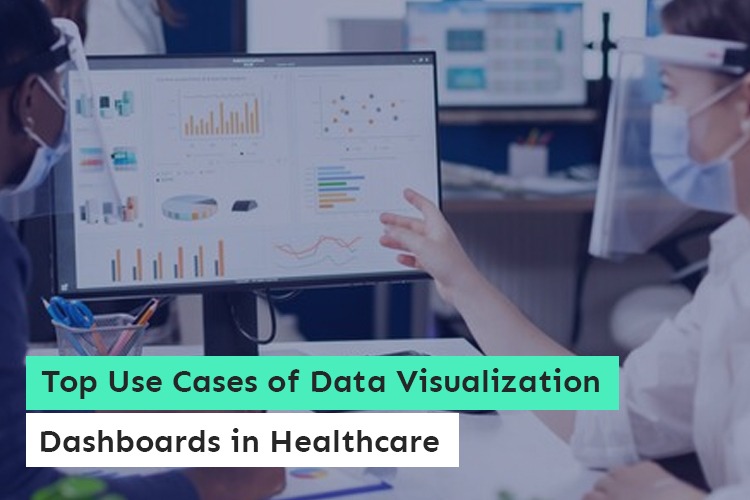
Top Use Cases of Data Visualization Dashboards in Healthcare
The human eye is naturally drawn to pictures more than text lists. Therefore, it is not an exaggeration to claim that data science visualizations in healthcare are essential for saving lives. The healthcare sector is being shaken up by big data. Simply put, data visualization is the practice of displaying data graphically, such as through […]...
Why HIPAA Compliance Matters for Healthcare Data Protection
The Health Insurance Portability and Accountability Act (HIPAA) is now a critical tenet of the healthcare industry in the US. The act goes beyond just protecting patient data. It also addresses the portability of insurance coverage. HIPAA makes medical facilities accountable for every aspect of safeguarding patient data. It establishes information security protocols that all […]...